
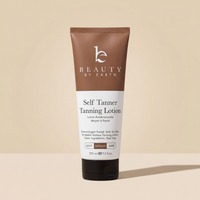
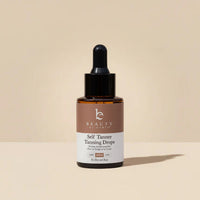
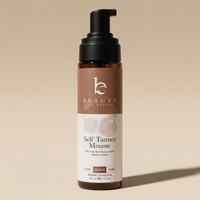
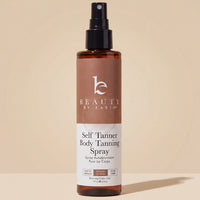


Let’s be real: your self tanner should make you look like you spent a week somewhere warm, golden, and wildly relaxing. It should not make you feel like you need a chemistry degree to understand what you’re putting on your skin.
We love a sunless glow. No tanning beds. No intentional UV tanning. No “oops, I forgot to reapply” sunburn situation. Just that healthy-looking color we all love. Quick note, though: self tanner is not sunscreen, so SPF still gets a standing invite.
The part you should care about most: Self tanner is skincare.

You’re smoothing it over your legs, arms, chest, and sometimes your face. You’re letting it sit on your skin for hours. You’re trusting it to give you that golden-hour glow without leaving your skin feeling dry, tight, irritated, or like it needs a full apology.
So yes, the ingredient list matters. A lot.
When people ask, “What are the worst ingredients in self tanner?” The answer usually isn’t one dramatic villain hiding at the bottom of the bottle. It’s more about a pattern: ingredients that may be more likely to irritate sensitive skin, dry skin out, add unnecessary color, or make a formula feel heavier than it needs to.
That should not be your kind of glow.
The Glow Party No-Invite List
If you want a tan that loves your skin back, here are the ingredients you don’t exactly need to rush and save a seat for.
Undisclosed “Fragrance” or “Parfum”
This one is worth checking for. “Fragrance” can be a catch-all term, "fragrance" or "parfum" on labels is a loophole allowing companies to hide hundreds of synthetic compounds, often including hazardous chemicals like phthalates, synthetic musks, sensitizers and allergens. Because fragrance formulas are considered trade secrets, companies are not required to disclose these specific chemical ingredients, allowing many harmful substances to go undetected.
Our take? We like formulas that are clear, intentional, and not hiding behind vague label language. Fragrance-free is great for sensitive skin. If a product does include scent, we want to know what’s in it. And yes, even botanical scent ingredients can bother some skin types, so transparency still wins.
Drying Alcohols
Some self tanners use drying alcohols like denatured alcohol to help the formula dry down quickly. Convenient? Sure. But fast-drying is not always the same thing as skin-loving. In skin irritation research alcohol exposure has been associated with reduced skin hydration, and some alcohol-based formulas can contribute to dryness or irritation depending on the concentration, formula, and frequency of use.
Why does that matter for your tan? Because dry, flaky skin is basically the villain in every patchy self tan story.
Parabens
Parabens are preservatives, and they’ve been used in personal care products for a long time. But review literature has reported endocrine activity and potential endocrine-disrupting concerns around parabens, which is why we choose to skip them when better options exist.
For us, clean beauty is about being intentional. If there’s a way to preserve a formula without using ingredients we don’t love, that’s the route we’re taking.
Synthetic Colorants
Some self tanners use cosmetic colorants to create an instant guide color. We’re not saying every dye is automatically a disaster. But dyes and color additives (often seen as FD&C Color #X) have been discussed in cosmetic allergy literature especially in categories like hair dye, and for sensitive skin we prefer fewer unnecessary extras when possible.
The tan should come from a well-balanced DHA-based formula, not from a layer of fake-looking color sitting on top of your skin.
Mineral Oils
We’re going to be precise here: cosmetic-grade mineral oil could be argued as not necessarily being “toxic,” and the research does not support calling it universally pore-clogging. However, mineral oil should definitely be avoided when using self tanner because it acts as a barrier, preventing proper DHA development, causing patchy, uneven color, and accelerating fading. It is a petroleum-derived, occlusive ingredient that sits on top of the skin rather than absorbing, making it a "tan killer" that should not be used before or after applying self tanner.
So why do we leave mineral oils off our glow party list?
Because in a self tanner, we prefer lighter-feeling, plant-based oils and butters that make the formula feel more like skincare and less like a heavy topcoat. Plant oils and butters have been studied for skin-barrier support, antioxidant activity, and anti-inflammatory properties, depending on the oil and formula.
Formaldehyde-Releasing Preservatives
Keep an eye out for names like DMDM hydantoin, imidazolidinyl urea, diazolidinyl urea, quaternium-15, and bronopol. These preservatives can release formaldehyde, and formaldehyde/formaldehyde-releasing preservatives are tracked in contact dermatitis literature.
We don’t know about you, but that’s not exactly what we picture when we think of radiant, healthy-looking skin.
What to Look for Instead: The "VIP List"
Here is the thing we care about most at Beauty by Earth: A self tanner should do more than bronze your skin. It should make your skin feel cared for.
Think ingredients your skin actually wants to hang out with:
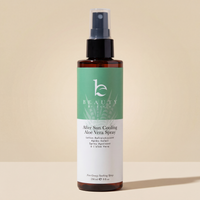
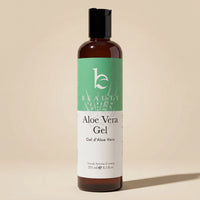
Organic aloe vera to soothe and support skin comfort.
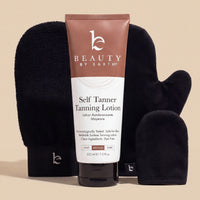
The holy grail of hydration. It ensures the skin remains plump so the tan develops smoothly. Aloe vera has been widely studied for topical and cosmetic uses. Our Self Tanning Body Lotion is has it.

Shea butter and plant-based oils to moisturize and help support the skin barrier.
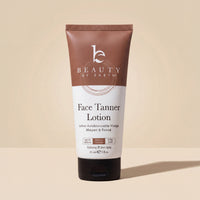
Plant oils and butters, including shea butter and pomegranate seed oil, have been reviewed for skin-barrier, antioxidant, and anti-inflammatory effects. You can find shea butter in our Self Tanning Body and Face Lotion. These plant-based fats nourish the skin without the occlusive, "pore-clogging" nature of mineral oil (as mentioned in our Mineral Oil section above).

Green tea and pomegranate extracts for antioxidant-rich botanical support.
These help neutralize any free radicals produced during the DHA development process. Green tea and pomegranate extracts have both been studied for skin-related antioxidant and dermatologic benefits. Our Self Tanner Drops contain both.


Not magic. Just thoughtful ingredients with a little science behind the glow.
How Beauty by Earth Does It Differently
At Beauty by Earth, we didn't just want to make a tanner that worked; we wanted to make one that was obsessively natural. The self tanner ingredients we prefer to avoid are undisclosed fragrance, drying alcohols, parabens, unnecessary synthetic colorants, heavy mineral oils, and formaldehyde-releasing preservatives.
Our rule of thumb? If the ingredient list reads like a riddle, your skin deserves better.
Our self tanners are formulated with naturally derived DHA from sugar cane. Unlike the "uninvited guests" listed above, our formulas are:
- Vegan & Cruelty-Free
- Free of Synthetic Dyes (No stained sheets!)
- Loaded with Organic Botanicals

Frequently Asked Questions (FAQ)
Is "Natural" DHA actually different from synthetic?
While the chemical structure of the DHA molecule is the same, the source matters for the overall formula. Naturally derived DHA is typically processed without the harsh chemical catalysts found in mass-market versions, making it gentler for those with reactive skin.
Why does my self tanner smell like crackers?
That "tanner smell" is the result of the DHA reacting with your skin. While we use botanical extracts to minimize this, avoiding synthetic fragrances (the #1 uninvited guest from the list above) means we don't mask it with heavy chemicals that could irritate your nose and skin.
Can I use self tanner if I have eczema or dry skin?
Yes, but you must avoid the Drying Alcohols we mentioned earlier. Look for our Self Tanning Lotion, which is packed with organic oils to prevent the "cracked" look often associated with tanning on dry skin.
Ready to Join the Clean Glow Party?
At the end of the day, we want you to feel confident in what you’re putting on your body. You deserve a formula that is intentional, transparent, and effective. Stop settling for "nasty" ingredients and "oops" oranges. It's time to switch to the clean formula that thousands of glow-getters trust.
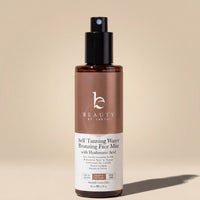
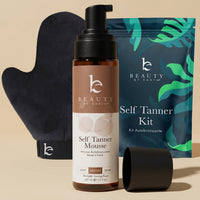
Whether you're a first-timer or a pro, our self tanner collection has the perfect shade for your skin tone.
Choose your clean self tanner, today!

References
-
Turner, J., O’Loughlin, D. A., Green, P., McDonald, T. O., & Hamill, K. J. (2022). In search of the perfect tan: chemical activity, biological effects, business considerations, and consumer implications of dihydroxyacetone sunless tanning products. Journal of Cosmetic Dermatology, 22(1), 79-88. https://doi.org/10.1111/jocd.14968
-
Sukakul, T., Bruze, M., & Svedman, C. (2024). Fragrance contact allergy – a review focusing on patch testing. Acta Dermato-Venereologica, 104, adv40332. https://doi.org/10.2340/actadv.v104.40332
-
Steinemann, A. (2016). Fragranced consumer products: exposures and effects from emissions. Air Quality, Atmosphere & Health, 9(8), 861-866. https://doi.org/10.1007/s11869-016-0442-z
-
Löffler, H., Kampf, G., Schmermund, D., & Maibach, H. I. (2007). How irritant is alcohol? British Journal of Dermatology, 157(1), 74-81. https://doi.org/10.1111/j.1365-2133.2007.07944.x
-
Nowak, K., Ratajczak–Wrona, W., Górska, M., & Jabłońska, E. (2018). Parabens and their effects on the endocrine system. Molecular and Cellular Endocrinology, 474, 238-251. https://doi.org/10.1016/j.mce.2018.03.014
-
González-Muñoz, P., Conde-Salazar, L., & Vañó-Galván, S. (2014). Allergic contact dermatitis caused by cosmetic products. Actas Dermo-Sifiliográficas, 105(9), 822-832. https://doi.org/10.1016/j.ad.2013.12.018
-
DiNardo, J. C. (2005). Is mineral oil comedogenic? Journal of Cosmetic Dermatology, 4(1), 2-3. https://doi.org/10.1111/j.1473-2165.2005.00150.x
-
Rawlings, A. V., & Lombard, K. J. (2012). A review on the extensive skin benefits of mineral oil. International Journal of Cosmetic Science, 34(6), 511-518. https://doi.org/10.1111/j.1468-2494.2012.00752.x
-
Lin, T.-K., Zhong, L., & Santiago, J. (2017). Anti-Inflammatory and Skin Barrier Repair Effects of Topical Application of Some Plant Oils. International Journal of Molecular Sciences, 19(1), 70. https://doi.org/10.3390/ijms19010070
-
Atwater, A. R., Petty, A. J., Liu, B., et al. (2021). Contact dermatitis associated with preservatives: retrospective analysis of North American Contact Dermatitis Group data, 1994 through 2016. Journal of the American Academy of Dermatology, 84(4), 965-976. https://doi.org/10.1016/j.jaad.2020.07.059
-
Malinauskiene, L., Blaziene, A., Chomiciene, A., & Isaksson, M. (2015). Formaldehyde may be found in cosmetic products even when unlabelled. Open Medicine, 10(1). https://doi.org/10.1515/med-2015-0047
-
Catalano, A., Ceramella, J., Iacopetta, D., et al. (2024). Aloe vera—An Extensive Review Focused on Recent Studies. Foods, 13(13), 2155. https://doi.org/10.3390/foods13132155
-
OyetakinWhite, P., Tribout, H., & Baron, E. (2012). Protective Mechanisms of Green Tea Polyphenols in Skin. Oxidative Medicine and Cellular Longevity, 2012, 1-8. https://doi.org/10.1155/2012/560682
-
Dimitrijevic, J., Tomovic, M., Bradic, J., et al. (2024). Punica granatum L. (Pomegranate) Extracts and Their Effects on Healthy and Diseased Skin. Pharmaceutics, 16(4), 458. https://doi.org/10.3390/pharmaceutics16040458


